
Cash Transfer Empowered Martha Amali to Launch Two Income Streams and Support Her Family in Sabon Gari Kano
-
by
Greenpasture
- No Comments on Cash Transfer Empowered Martha Amali to Launch Two Income Streams and Support Her Family in Sabon Gari Kano
When cash transfers are provided in a regular and predictable fashion, they can help households to overcome credit constraints, manage risk better, and address other market failures. And this can help increase productive spending and investment.
Martha Amali, a forty-two-year-old woman who hails from Sabon Gari community, is a mother of three children, and the household was enrolled under the HIV Expose Infant (HEI) stream.
Martha Amali was fortunate to be selected for the cash transfer scheme after her household was assessed to be vulnerable due to the fact that her husband lost his job and the household’s responsibility was solely on her. She is a tailor and she sews clothes for her customers in her friend’s shop because she does not have a sewing machine.

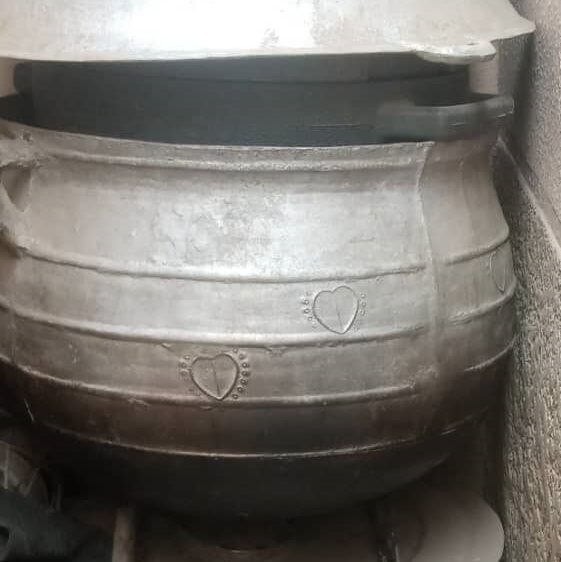
After receiving the cash for three consecutive months, which amounted to Two hundred and ten thousand Naira (210,000), Martha made good use of her money by firstly purchasing a fairly used sewing machine, which she no longer uses to sew at home for her customers and her children. She also bought some cooking utensil, which includes a 50 kg of pot, a frying pan and a food warmer for rent. Martha said;
“Starting this rental business has been on my mind for the past two years but I don’t have the financial capacity to start but with the help of ICHSSA 3 project my dream has finally come true”.
From her tailoring work, she earns an average amount of 8,000 Naira weekly and also rent out the cooking utensil and earn an average amount of 5000 Naira weekly.
Martha was happy for the intervention; she now takes care of her family expenses while her husband is still hunting for a job. Martha said I can now provide for the needs of my children; with my income, I can provide daily food and cater for my children’s essential needs.
“I want to appreciate ICHSSA 3 for bringing cash transfer intervention to my household; it has greatly improved the economic status of my household.”

